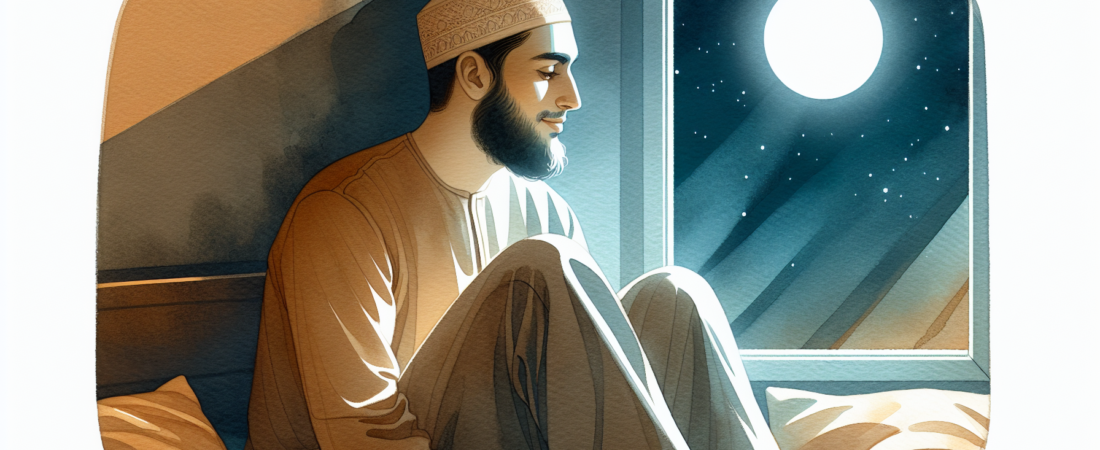
Why Your Mental Health App Can’t Stop Overthinking Alone
Overthinking at night is one of the most common complaints among men with unmanaged stress and anxiety. According to NHS Every Mind Matters, racing thoughts at night are a primary symptom of anxiety — not a character flaw or a sign of weakness. A mental health app can help you understand patterns and track triggers, but in the acute moment of an overthinking spiral, you need specific techniques.5 Techniques to Stop Overthinking at Night
1. The cognitive offload. Overthinking is often the brain’s attempt to solve problems it hasn’t finished processing. Give it permission to stop by writing down every thought that’s circling. Not to solve them — just to capture them. Once it’s written, your brain stops trying to hold it.2. The 5-4-3-2-1 grounding technique. Name 5 things you can see, 4 you can feel, 3 you can hear, 2 you can smell, 1 you can taste. This forces your attention into the present moment and out of the future-facing loop that drives overthinking. Our complete guide to the 5-4-3-2-1 grounding technique goes deeper on this.3. The mental health app check-in. Using a mental health app before bed to process your day — rather than lying in bed doing it in your head — externalises the processing. You put it somewhere. It doesn’t need to live in your mind anymore.4. Set a worry window. Give yourself 20 minutes earlier in the evening — not at bedtime — to deliberately think through everything that’s worrying you. When those thoughts return at night, your brain already knows it’s had its time. “I’ve already thought about this. It can wait until tomorrow.”5. The body scan before sleep. Overthinking is often accompanied by physical tension that keeps the nervous system in alert mode. Doing a body scan meditation before sleep signals to the body that it’s safe to rest — which makes it easier for the mind to follow.What a Mental Health App Can Do for Chronic Overthinking
If overthinking at night is a consistent pattern for you, a mental health app that tracks your mood over time can help you identify what’s driving it. Is it work-related? Does it spike after certain kinds of days? Are there patterns in what you’re overthinking about?MindCore AI is a mental health app that remembers what you share across sessions. If you tell it on Monday that work has been overwhelming, it will ask on Tuesday how you’re managing. That kind of continuity — the sense that something is paying attention to your story over time — changes the relationship you have with your own stress.The Mental Health Foundation’s sleep and mental health resources are also worth reading if overthinking is consistently disrupting your sleep.Download the Mental Health App Built for Moments Like This
MindCore AI was built for exactly this — the late-night moments when your mind won’t stop and there’s nobody to talk to. Download it on Android and give your thoughts somewhere to go.Download MindCore AI on Google PlayFrequently Asked Questions About Overthinking at Night
Why do I overthink at night?
Overthinking at night happens because your brain has fewer distractions and tries to process unresolved thoughts from the day. Anxiety is future-focused — and the quiet of night gives it space to run unchecked. This is completely normal and does not mean something is wrong with you.
How do I stop my mind racing at night?
The most effective technique is the cognitive offload — writing down every thought that is circling before bed. Once it is written, your brain stops trying to hold it. Combining this with the 5-4-3-2-1 grounding technique or a body scan meditation creates the conditions for sleep.
Can a mental health app help with overthinking?
Yes. Using a mental health app before bed to process your day externalises the thoughts that would otherwise keep you awake. MindCore AI provides a private daily check-in that helps you put down what you are carrying before it arrives at bedtime as anxiety.
Is overthinking a sign of anxiety?
Persistent overthinking — especially at night — is one of the most common symptoms of anxiety. It is not a character flaw. It is the brain’s attempt to solve problems it has not finished processing during the day.